EBSMUN 2027 Register

Model United Nations · Rheingau

EBSMUN 2027 — Model United Nations conference, 2–4 April 2027

Three days of debate, negotiation and diplomacy at EBS Universität für Wirtschaft und Recht — student-led, and open to delegates from anywhere.

When
2–4 April 2027Friday to Sunday
Where
EBS UniversitätRheingaustraße 1, 65375 Oestrich-Winkel
Format
5 committeesOne theme, from beginner to expert level

About the conference

Diplomacy is a skill you practise, not one you read about.

EBSMUN is a student-led Model United Nations conference for internationally minded students who want to debate global challenges and experience diplomacy in practice.

Over three days, delegates represent a country, build coalitions and negotiate a resolution that can actually pass. Organised entirely by students of EBS Universität für Wirtschaft und Recht in the Rheingau.

The first edition

2026
Inaugural conference, 6–8 March
60
Delegates
7
Committees

The first edition ran under the theme Fostering Global Citizenship in a Deglobalizing World.

Who it is for

  • DelegatesUniversity and upper-secondary students, no experience needed
  • DelegationsSchools and universities sending a group
  • ChairsExperienced MUN participants who want to run a committee
  • PartnersCompanies and institutions supporting the conference

No Model UN experience needed — rules, study guides and templates arrive well before the conference.

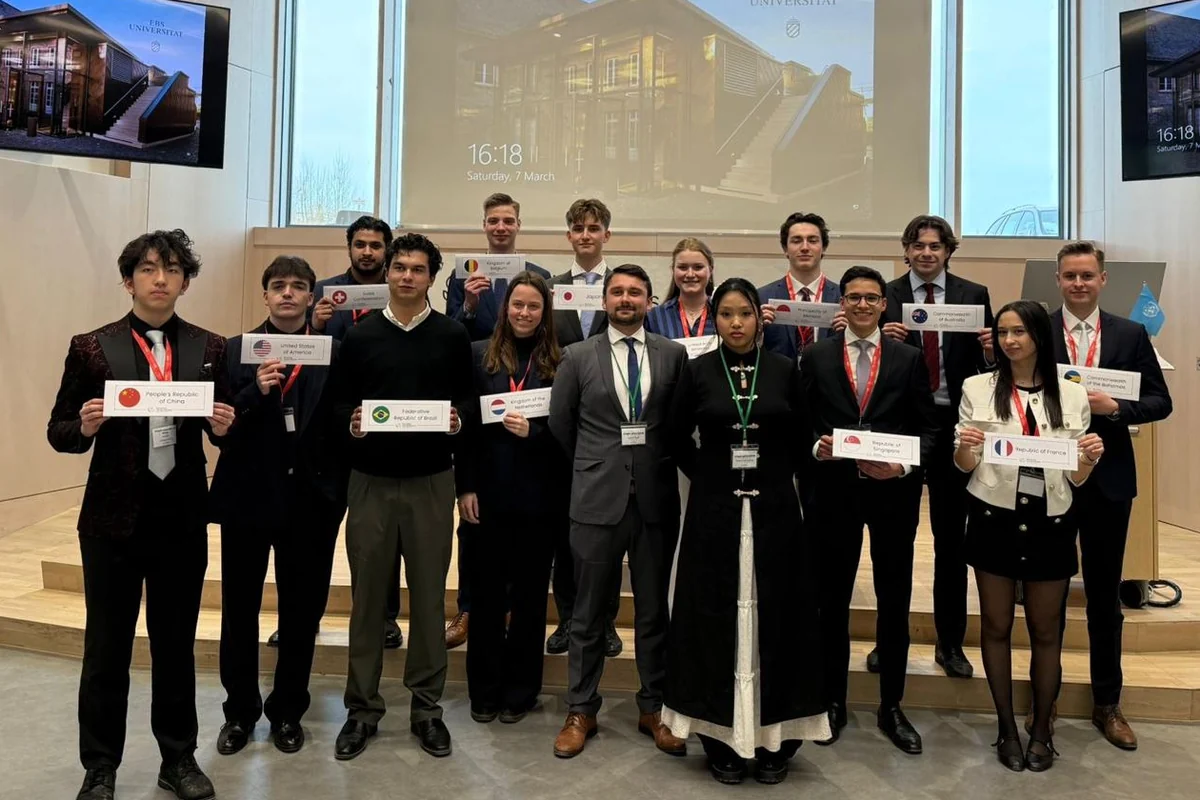
Delegates of the first EBSMUN on stage in the EBS lecture hall, each holding their country placard
EBSMUN 2026 · The first edition
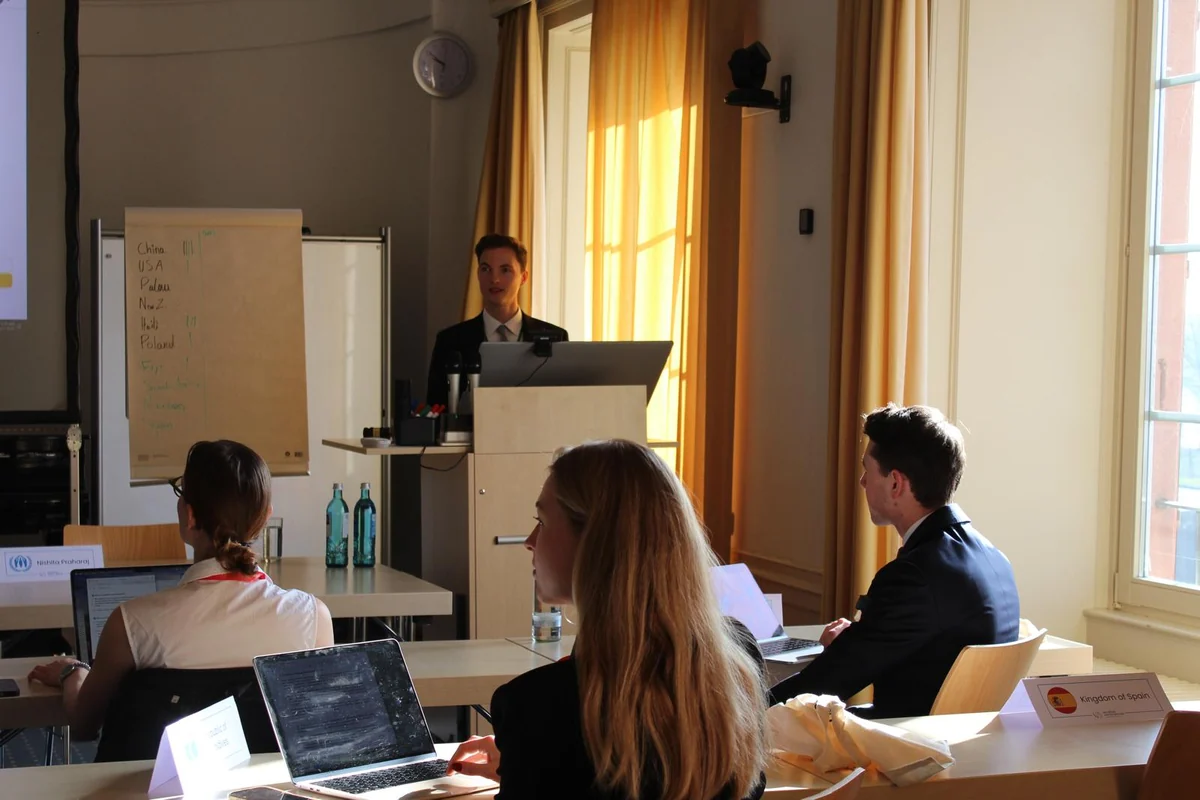
A delegate speaks from the podium while others follow the debate from their desks, a speakers list on the flipchart beside him
In committee

Committees

Five committees, one theme.

EBSMUN 2027 is built around Power, Responsibility and Global Governance: balancing sovereignty, economic influence and human security in the twenty-first century.

ECOFINBeginner

Economic and Financial Committee

Managing Global Inflation and Supply Chain Instability During Energy Crises

Energy shocks, commodity prices and the resilience of global supply chains.

Read the brief

Recent energy crises have shown how quickly disruptions in oil, gas and electricity markets spread through the global economy. Higher energy and transport costs push up the price of food and essential commodities, while geopolitical tension, sanctions, export restrictions and concentrated supply chains amplify the shock. The committee examines how the international community can soften future energy and commodity disruptions without undermining open trade, and without placing a disproportionate burden on developing and trade-dependent countries.
CSWBeginner

Commission on the Status of Women

Protecting Women from Exploitation in the Global Sex Industry: Regulation, Trafficking and the Protection of Rights

Women’s rights, sexual exploitation and competing approaches to regulating commercial sex.

Read the brief

States differ fundamentally in how they regulate prostitution and other forms of commercial sex. Approaches range from prohibition and criminalisation to legalisation, decriminalisation and models that criminalise the purchase rather than the sale of sexual services. The committee weighs these competing approaches while addressing trafficking, organised crime, labour rights, public health and the growing role of online platforms.

FAOBeginner

Food and Agriculture Organization

Securing Global Food Systems in the Face of Climate Change

Climate-resilient agriculture, food security and sustainable resource management.

Read the brief

Climate change is reshaping agriculture and global food production. Floods, heat, shifting rainfall, soil degradation and other extreme weather events put food production under severe strain. The committee examines how international food and agricultural production can adapt to changing conditions and more frequent climate disasters while maintaining food security, protecting natural resources and supporting adaptation in developing countries.

UNCTADIntermediate

UN Conference on Trade and Development

Attracting Foreign Investment in an Era of Geopolitical Risk

Foreign investment, geopolitical risk and sustainable development in emerging economies.

Read the brief

Foreign direct investment brings capital, technology, infrastructure and jobs, particularly to developing economies. Yet geopolitical tension, sanctions, strategic competition, supply-chain disruption and national-security concerns have made cross-border investment increasingly political. Governments are trying to stay attractive to investors while protecting strategic sectors and reducing their exposure to coercion. For developing countries the dilemma is sharp: too many restrictions deter investment they badly need, too few can create long-term dependencies. The committee examines how governments and international institutions can keep investment open while managing political, sovereign and security risks.

IMFExpert

International Monetary Fund

Preventing Sovereign Debt and Banking Crises in a High-Interest-Rate Global Economy

Sovereign debt, banking stability and the prevention of cross-border financial crises.

Read the brief

High interest rates, weak growth and elevated public debt put governments and financial institutions under heavy pressure. Rising borrowing costs make sovereign debt harder to service, while banking losses, capital flight and currency depreciation can carry instability across borders. The committee examines how the IMF and its member states can identify vulnerabilities earlier, contain the spread of financial crises, and improve the international response to sovereign debt and banking crises through lending, surveillance and cooperation.

Programme

Three days, from opening gavel to closing ceremony.

Ceremonies, committee sessions, networking and a diplomatic social event — because a good deal is rarely struck inside the committee room alone.

Day one

Friday, 2 April

  • PM Registration & delegate check-in
  • PM Opening ceremony
  • PM First committee session
  • EVE Welcome reception

Day two

Saturday, 3 April

  • AM Committee sessions
  • PM Committee sessions & unmoderated caucus
  • PM Networking with partners
  • EVE Diplomatic social event

Day three

Sunday, 4 April

  • AM Final committee sessions
  • AM Voting procedure
  • PM Closing ceremony & awards

Indicative schedule — exact times are published with the delegate handbook.

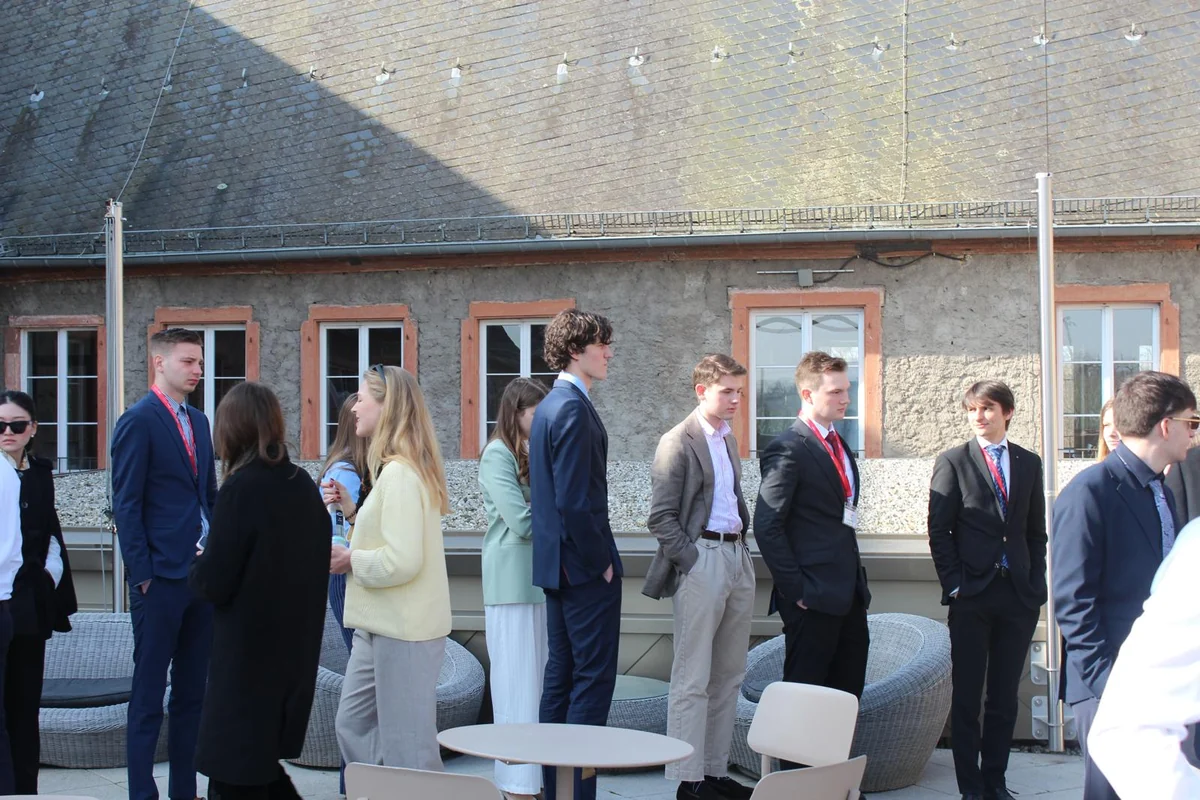
Delegates in suits talking on the sunny roof terrace between sessions
Between sessions
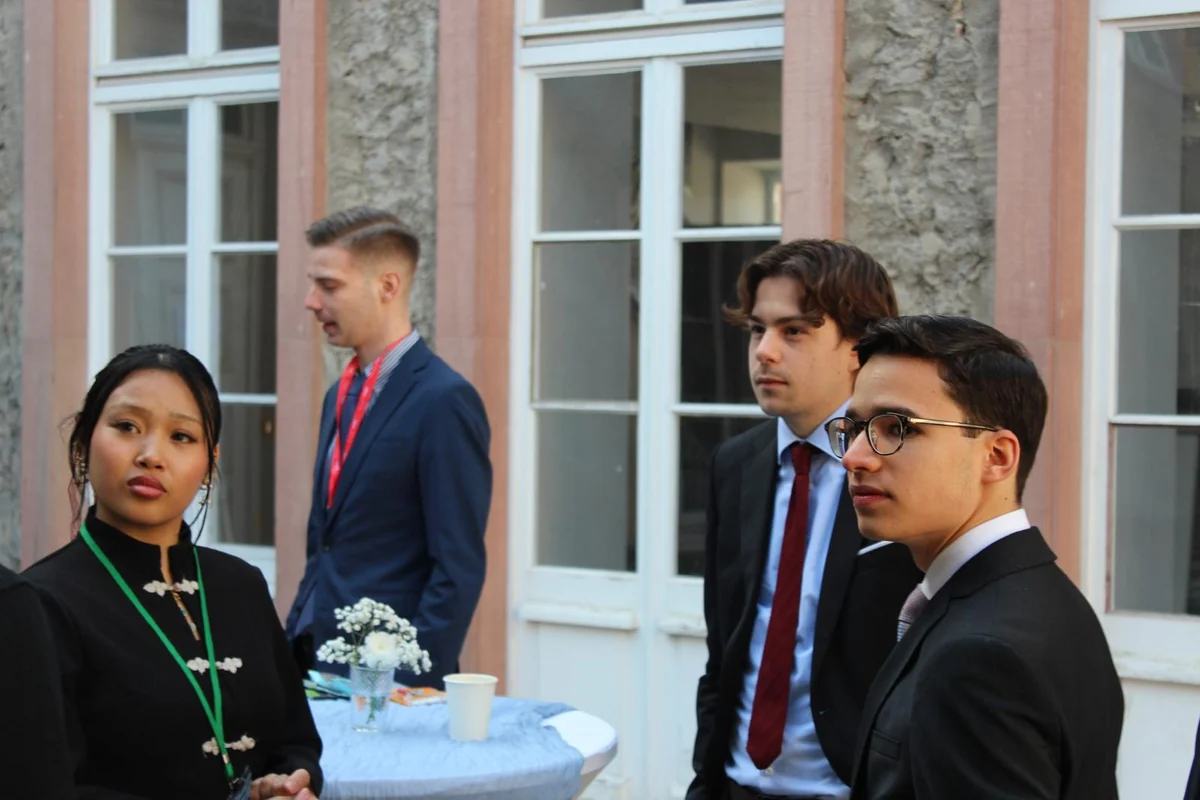
Delegates at a standing table in the historic courtyard of the campus
The courtyard

Registration

Applications for EBSMUN 2027

Applications are open on mymun — for individual delegates, head delegates, chairs and faculty advisors. Places are decided on a rolling basis, so early applications hear back first.

  • Since 27 Aug 2026Applications open on mymunOpen
  • 16 Mar 2027Chair applications close
  • 26 Mar 2027Head delegates & faculty advisors close
  • 27 Mar 2027Delegate applications close
  • 2–4 April 2027EBSMUN 2027, Oestrich-WinkelConfirmed

Delegates who need a visa for Germany should apply as early as possible — appointments at German missions can take months.

Apply through mymun

Committees, fee and application form, all in one place.

EBSMUN 2027 on mymun

Questions or group bookings: info@ebsmun.de

  • Delegate fee TBA
  • Includes Meals · social
  • Accommodation Not included
  • Working language English

Partners & sponsors

Meet the people who will be running things in ten years.

Our conference is a platform to engage with ambitious young talent, share real-world perspectives, and help shape tomorrow's leaders.

Meet students who chose to spend a weekend on international policy — on site, on stage or in the networking programme. We shape the package around what you want: recruiting, visibility or a session of your own.

Presence

On site

A stand in the networking area, materials in the delegate pack, and your team in the room.

Platform

On the podium

A keynote at the opening or closing ceremony, or a workshop between sessions.

Support

Behind the scenes

Named support for a committee, the social event, or delegate scholarships.

Request the partner pack

With thanks to

Partners of the 2026 edition

Seven partners supported the first EBSMUN with water, beer, wine and Sekt.

Questions

Before you apply

Do I need Model UN experience?

No. A good share of delegates at any conference are attending their first. You will get the rules of procedure, a study guide for your committee and a position paper template well before April, and the chairs run the room in a way that works for beginners. Three of the five committees — ECOFIN, CSW and FAO — are set at beginner level. If you have done this before, UNCTAD and the IMF are where you want to be.

What is the theme of EBSMUN 2027?

Power, Responsibility and Global Governance: balancing sovereignty, economic influence and human security in the twenty-first century. The five committees are ECOFIN, the Commission on the Status of Women (CSW), the Food and Agriculture Organization, UNCTAD and the International Monetary Fund.

Who can attend?

University students and upper-secondary students from anywhere. You can apply as an individual delegate or as part of a delegation from your school or university.

What does it cost?

The delegate fee for 2027 is being finalised and will be published with the application. It covers meals during the conference and the social event. Travel and accommodation are not included.

Where do delegates stay?

Accommodation is arranged individually. We will publish a list of options in Oestrich-Winkel and the surrounding Rheingau, along with the group rates we are able to negotiate, when registration opens.

How do I get to Oestrich-Winkel?

The campus is at Rheingaustraße 1, 65375 Oestrich-Winkel, about 45 minutes by train from Frankfurt Airport via Wiesbaden. Detailed travel directions go out with the delegate handbook.

What is the working language?

English, in every committee and in all conference documents.

Do you provide visa invitation letters?

Yes, once your place is confirmed and the delegate fee has been paid. If you need a visa for Germany, apply as early as you can — appointments at German missions can take months, which is why visa-dependent delegates should not wait for the March deadline. Write to info@ebsmun.de from the address you registered with, giving your name exactly as in your passport, your passport number, date of birth, nationality and the dates of issue and expiry. The letter confirms your registration and the paid fee; it does not include any undertaking to cover travel, accommodation, insurance or living costs, and we issue it only to the delegate in person, never to an institution or a third party.

Can I chair a committee?

Yes. We recruit chairs separately from delegates, and previous MUN experience matters here. Write to us and we will send you the chair application when it opens.